
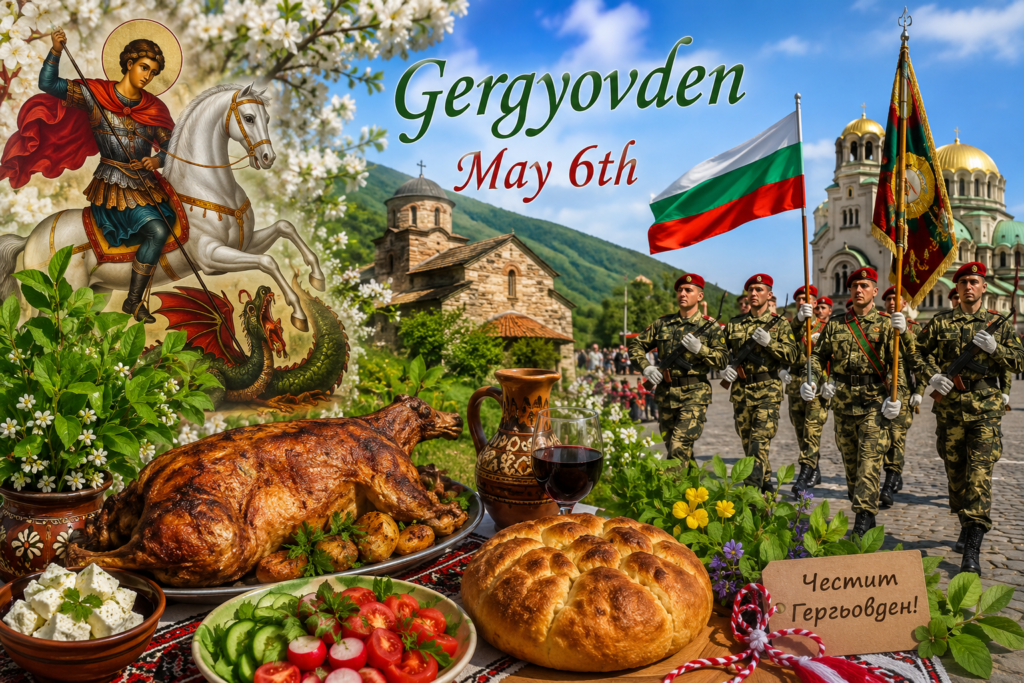
Every year on May 6th, Bulgaria celebrates one of its most important and beloved holidays – Gergyovden, also known as Saint George’s Day. The holiday honours Saint George, who is remembered as a brave soldier and protector of people. In Bulgaria, this day is associated with courage, spring, health, and family traditions.
Gergyovden has both religious and national importance. For the Bulgarian Orthodox Church, it is the day dedicated to Saint George, who is famous for the legend in which he defeats a dragon and saves a town. Because of his bravery, he became a symbol of strength and victory.
May 6th is also celebrated as the Day of the Bulgarian Army. Military parades and ceremonies take place across the country, especially in Sofia, where soldiers march proudly to honour the Bulgarian Armed Forces. Many people watch the celebrations on television or attend them in person.
One of the most important traditions of Gergyovden is the festive meal. Families often prepare roasted lamb because Saint George is considered the protector of shepherds and animals. Fresh salads, cheese, bread, and traditional Bulgarian dishes are also served. Many people gather with relatives and friends to celebrate together.
Another tradition is decorating homes with green branches and flowers. These symbols represent nature, new life, and the arrival of spring. In some villages, people still keep old customs, such as early morning rituals for health and good luck.
Gergyovden is also a name day for everyone named Georgi, Gergana, Galya, Gina, and other similar names. Since Georgi is one of the most common names in Bulgaria, thousands of people celebrate their name day on May 6th each year.
Today, Gergyovden remains a holiday that brings Bulgarians together. It combines history, religion, family traditions, and national pride. For many people, May 6th is not only a day of celebration but also a reminder of Bulgarian culture and values that have been preserved for generations.
Zahary Petkov – 9E