
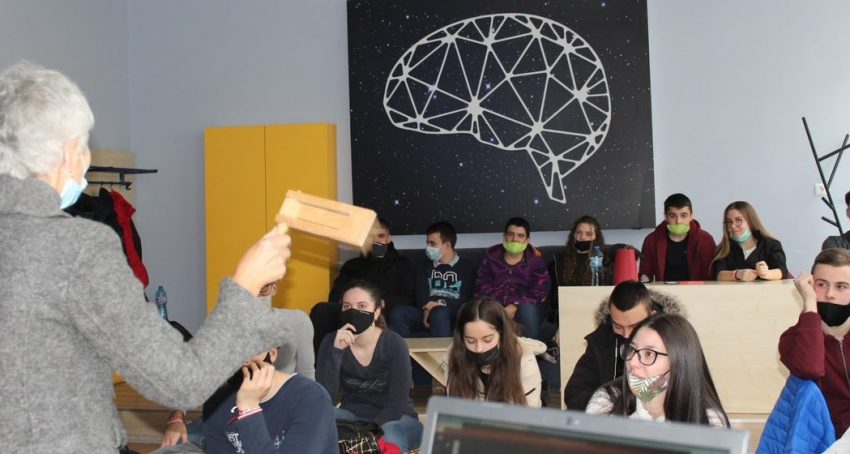
On 2nd March, the students from 11 “a”, and their teacher, Mrs Timanova, organized a peculiar event about customs throughout the world. The students had to choose between 14 different objects to talk about. There were from 2 to 3 people per team.
The first object was a traditional porcelain English plate with an eye-catching landscape painted on it and some delicate blue-colored details circling the rims.
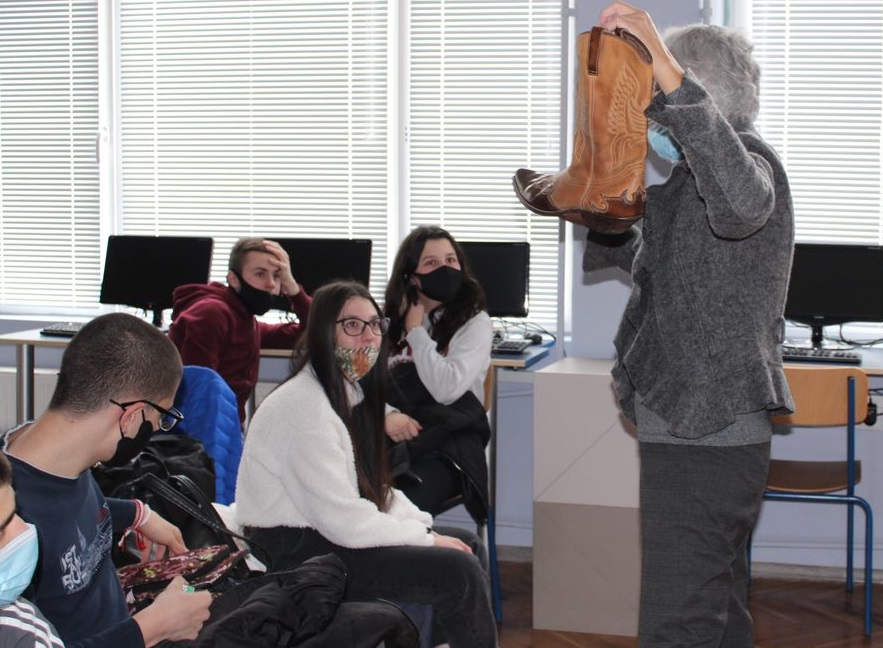
Then, the teacher presented a fairly new pair of cowboy boots, typical for the USA. Convenient for riding and popular with their high heels made of stacked leather, the shoes are still worn and seen as fashionable today. Typical for cowboys, and extremely convenient for riders, the classic western wear attracted the attention of many students, and made it easy for them to recognize the rodeo shirt.
Next, Lederhosen – a pair of traditional Tirol German pants. They are knee-length breeches, worn on German holidays and customs, and accompanied by a hunter’s hat – typically decorated with a feather.
The fifth object was a Chinese jacket – tangzhuang. Straight collar is common for all jackets of this type. Tangzhuang is usually worn by Chinese horse-riders.
A Fabergé necklace was the next object to be presented. The jeweled Russian egg was popular in the end of 19th, and made under the request of Tsar Alexander lll, as a gift for the Empress. The jewelled Easter eggs became quite popular within the royal family, and also worldwide.
Then, samovar (Russian tea pot), was introduced. Samovars are usually made of metal. Their handles are shaped like beautiful ornaments and, despite their having originated in Russia, today they are well-known in the rest of the world.
Everybody quite easily guessed the next object – the famous matryoshka doll. The toy is very popular and everyone has seen it at least once in their life. However, very few people know that the dolls are a symbol of fertility in the Russian culture. The “dress” painted on the doll is a sarafan – a peasant’s jumper dress, decorated with symbolic ornaments.
A Russian saltshaker was the tenth object. However, that was no ordinary salt shaker – it was wooden and colorfully painted. In Russia, the tiny spice containers are also used as musical instruments.
The traditional Russian wooden whistle was the next surprise. Shaped like a bird, the toy is favorite to many children and is also known as a musical instrument.
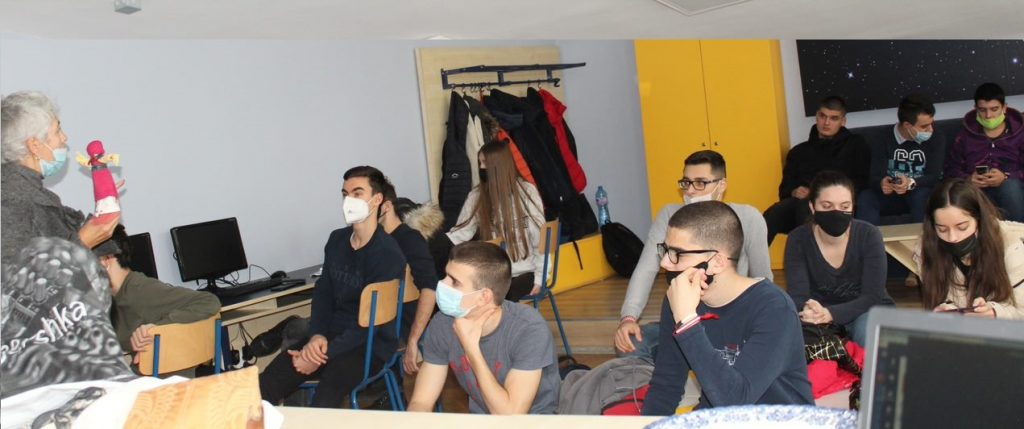
Afterwards, a colorful doll made of straw and cloth appeared in the hands of the presenter. The doll is used for the Russian custom Maslenitsa and usually gets burned on the last day of the celebration.
And last, but not least, the teacher demonstrated a clown hat, worn by Russian street actors – skoromorkhs. The hat looked playful, painted in several gaudy colors which did not match, since that deliberately funky appearance was meant to attract a lot of attention towards the skoromorkhs.
The students had a variety of objects to choose from, and after making their choice, each team began to carefully study the history of the customs. A delicate creative noise filled the room and watching them work was a delightful experience.
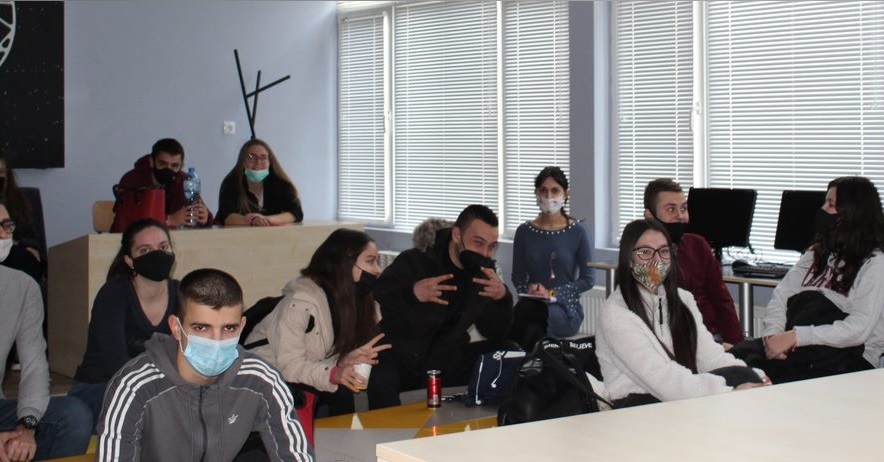
Afterwards, each story was told and all teams did a good job presenting their chosen topic. Thus, all the hard work and the consequent excellent Russian language skills did pay off, and the audience was simply astonished!
Wish I had attended! Sounds like you guys had great fun! 🙂