
By Alexandra Sarieva (8D)
On Feb. 27, the Newspaper Club hosted a visit from George Ruschev, a journalist for Flagman.bg in Burgas. Ruschev talked to us about what it takes to be a journalist and also a topic that has been bothering the professionals as well as us young journalists — fake news. Fake news cannot be stopped as too many people have already started posting it just to gain popularity because of the interesting catchy content they offer readers thirsty for juicy rumours.
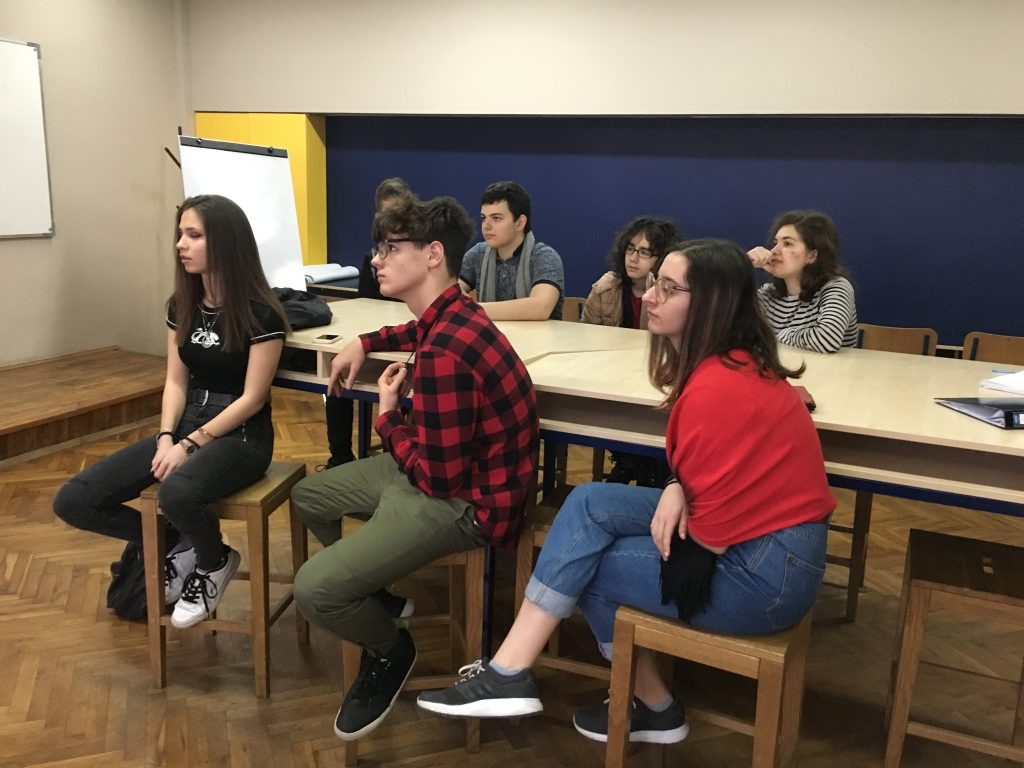
ewspaper Club members listen to George Ruschev of Flagman.bgAs I was interested, I asked him if he thought there were already too many news channels, such as BTV, NOVA, and Flagman, which are trusted but also depend on ratings given by the readers which they fight for. I know that some of those trusted media sources that we read or watch because we know that they will provide us the right news are fighting for ratings and are dependent on popularity, so why wouldn’t they be tempted to also publish fake content? After a pause, Ruschev explained he had never seen any on the Flagman.bg site but that we can’t be sure and that’s why he wanted to explain how we could define which news is fake and which is not.
He told us that the easiest, most recognisable feature of fake news is an elaborate title like “MY OH MY!” I myself don’t count singer Camila Cabello’s posts or others by celebrities that are too exaggerated, like “cheating girlfriend caught on camera” (not always because the news could really be talking about this, but if it only tells us about the girl who was sitting next to another man then it’s not true).
Others asked if he had seen fake news somewhere to which he said that he had witnessed it as he is a journalist and also has to explore other news. He told us how important it was for us to identify fake news articles as we could mistakenly use them as our potential sources and confuse others when writing news articles, or they could make us think in different ways about the world and confuse us and our thoughts. Some fake news sources are clumsily hidden under too obvious titles but some are not that easily distinguished or differentiated from the real ones as people who do this for a living are getting more and more careful and use new tricks, Ruschev warned. They may start by publishing common news for people to believe them, then start with the juicy fake news.
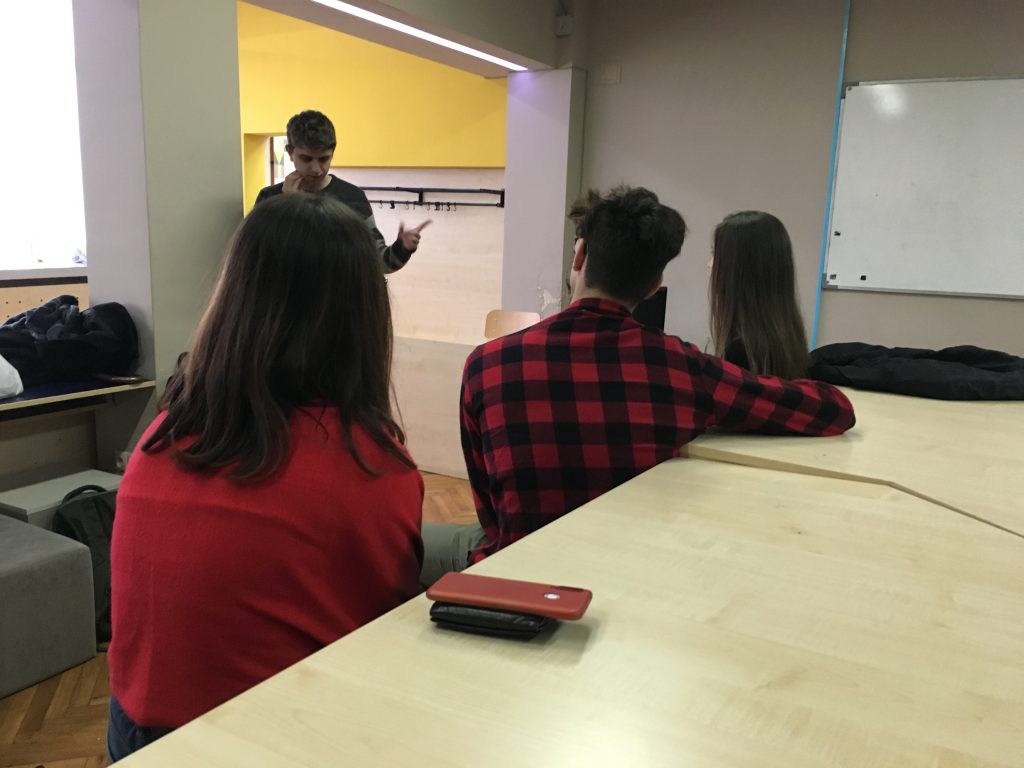
Ruschev talked to us about how to construct an article as well, which was very useful, and told us about his experience as a journalist. He explained the difference between the opinion and news pages in a newspaper. He also showed us his badge that identified him as a professional journalist attached to a particular news outlet, which helps to give access to sources and ensure accountability. Victoria asked him if he had chosen his job and whether he liked it to which he said “yes” with no hesitation, though he said that there are times when you have to witness things that are very difficult.
It was useful for us and all we could tell you is beware for those obvious signs of whether the news you’re reading is fake or not; it is important as you may end up having the wrong information about something and confuse others. Such misunderstandings have ruined peoples’ lives and led to many unwanted consequences that we now regret. News has the reputation of informing the world on certain topics; if you trust any news source, even though it may be considered trustworthy, you should always look at the content carefully and not trust everything you read.
Don’t underestimate the importance of news; you may think that it’s not a big deal whether someone has cheated or not but all the people rely on the accuracy of news – that’s important and what makes people read it and that’s why some people fake the news. So, do not think that they’re not that important as some peoples’ lives depend on news, not only the journalists but the celebrities or the people they’re writing about.