
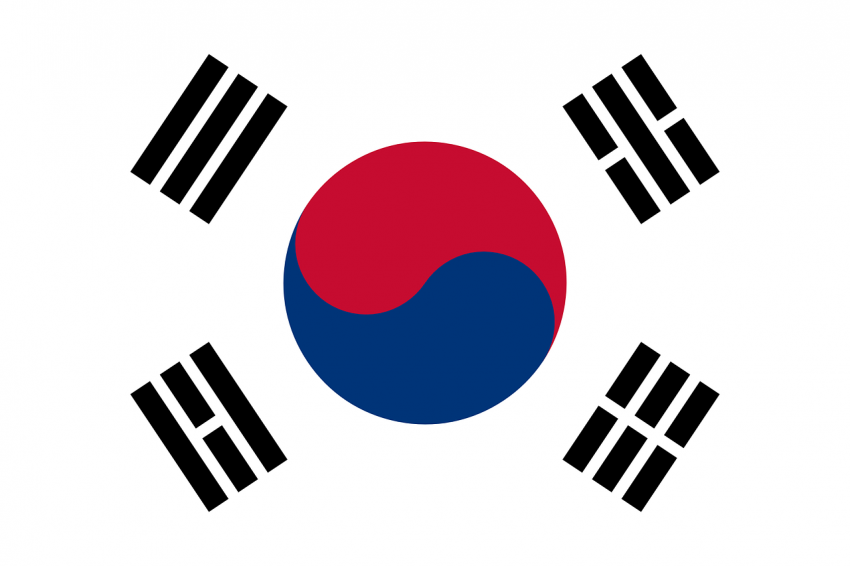
By Berrin Yesil (11th)
Nowadays, so many students in my school and also my friends are so interested in learning about the culture of South Korea, and especially in getting an education there impacted by big successful Kpop groups, Korean dramas, and as well as it having a really fast network. So, if you are curious about the educational system of South Korea, you are welcome to gain some new knowledge here!
Just as the cultures of South Korea and Bulgaria are radically different, their ways of work and education are quite different, too. The fact is that South Korean people are workaholics and if you study there you’ll have some difficulties with spending time — like you’ll become more tired there than in Bulgaria — there are a lot of benefits to studying there. These benefits are that South Korea is a unique study destination for international students, has outstanding educational rankings, first-rate facilities and technical programs; and it is an affordable option for international study, offers a unique university experience, a place to develop language skills and to get ready for international work.
According to Wikipedia, https://en.wikipedia.org/wiki/Education_in_South_Korea, first of all, Korean education is about kindergarten; primary school from 1 to 6 grade; middle school from 7 to 9 grade; high school from 10 to 12 grade and then university ( tertiary education).
Many students in Korea start kindergarten at the age of three, and continue to study there for three or four years before starting their formal education. Children are expected to learn basic maths, reading and writing. Also, in this education it is included to learn how read and write in Korean and often in English as well as Chinese. Teachers teach them to recognize body parts, food and nutrition, and adult jobs in those languages by using games.
Moreover, Korean kindergartens offer their classes in English in order to give to students a “head- start” in later mandatory English.
In primary school, students have different programs in their subjects, and usually the class teachers cover most of the subjects. However, there are some specialized teachers, such as for physical education or foreign languages.
In first and second grade they learn Korean, mathematics, and physical education.
In third till sixth grades the subjects taught are : Korean, English, Moral Education, Social Studies, Mathematics, Science, Art, Music, Practical Arts and Physical education.
Unfortunately, there is a disadvantage in this education and this is that teachers still use corporal punishment discreetly for bad behaviour or bad discipline, even though since 2011 this kind of punishment is officially prohibited as mentioned in https://en.wikipedia.org/wiki/Education_in_South_Korea.
Also, according to Wikipedia, during middle school, students have to take their studies much more seriously. They have to take seven classes a day to study Korean, Algebra, Geometry, English, social studies and science, with each lesson lasting for 45 minutes, while in Bulgaria lessons last for 40 minutes. Regulation uniforms and haircuts are enforced, according to AsiaSociety.org (https://asiasociety.org/education/south-korean-education?fbclid=IwAR2hAJ7x4yA6-JQPD8ffLqfT4bX0IQbi82HyYAg_x0PMsdI3TPOuAj0BoIE). Moreover, students’ lives are more controlled, teachers move around from classroom to classroom and a few teachers apart from these who teach special subjects have their own rooms to which students come.
In the period of high school students must study for increasingly long hours each year moving towards graduation to be more competitive in order to enter extremely attractive universities in Korea. They have two semesters from March to August and from September to February.
In Korea, it is said, that if you sleep three hours each night, you’ll enter into a top university, if you sleep for four hours each night you’ll enter into another university, but if you sleep five or more hours each night, forget entering any university. Therefore by that logic, in high school students leave home at 5 a.m. and finish their school at 4 p.m. After that they go to a studying room in the school or to a library instead of going home; this is called “yaja” or evening self- study. By the fact that schools provide paid dinner for them, students don’t need to go back home for food. After finishing that evening self-study, they return home and to specialty study school till 3 a.m. from Monday to Friday, but often at the weekends, too. By the way each lesson lasts for 50 minutes. This is written also in https://en.wikipedia.org/wiki/Education_in_South_Korea.
According to AsiaSociety.org (https://asiasociety.org/education/south-korean-education?fbclid=IwAR2hAJ7x4yA6-JQPD8ffLqfT4bX0IQbi82HyYAg_x0PMsdI3TPOuAj0BoIE), entrance to the universities is based largely on the scores that students achieve on the CSAT, which accounts for 60% of the admission criteria while the remaining 40% is dependent on grades from comprehensive high school records. In addition to the CSAT scores, universities also take volunteer experience, extracurricular activities, letters of recommendation, school awards, and portfolios into consideration when assessing a prospective applicant. It’s the same program in Bulgaria but here instead of CSAT scores, the results from the matriculation exams are considered.
Three universities recognized as the top are Seoul National University, Korea University, and Yonsei University. The other well-known universities are Pohang University of Science and Technology, Sogang University, Sungkyunkwan University and Korea Advanced Institute of Science and Technology while in Bulgarian they are : UNSS, SU “Paisii Hilendarski”, Technical University Sofia, VTU “Saint Kiril and Metodii”.
Bachelor’s degrees are from four-year colleges and universities, like national universities of education, The Korean National Open University, technical colleges and cyber universities but it can take six years for medicine, law and dentistry. Also, bachelor degrees require up to 130 to 140 credit hours to be completed.
In order to enter in Master’s degree, the applicant must have a Bachelor’s degree with a GPA of 3.0 (B) or greater from a recognized institution, two recommendation letters from the professors and an undergraduate record showing their GPA and qualifying examinations in addition to an interview. The programs will involve 24 credit hours of coursework. So, if students achieve a GPA of 3.0 (B) or higher, pass a comprehensive examination as well as the other foreign language examination, they will be able to take a Master’s degree.
According to https://gezimanya.com/guney-kore/guney-korede-tatiller-bayramlar-onemli-gunler?fbclid=IwAR3vVpxwBT60rI0LWlZc5DJ86uIDib1J0YMuQSubaxjcZFixvFhCE-EbHqE (translated from Turkish) about vacations, Koreans have holidays on 1, 2 January because of the New Year, on 1 March because of the Independence Day, on 22 May because of the Bhudda’s birthday, on 6th June for Remembrance Day, on 17 July because of Constitution Day, on 15 August because of Freedom Day, on 3 October because of the National Liberation Day, Thanksgiving depends on the Chinese calendar and on the 25th December because of Christmas. We also have our national days and holidays on 1 January, the New Year, on 3rd March because of the liberation from the Ottoman Empire, on 19th April because of Easter called Velikden, on 1 May because of the Day of the Workers, on 6th May George Day and Day of Bulgarian Army, on 24th May because of the Day of Cyrillic alphabet, on 6th September because of the Union Bulgaria, on 22nd September because of Independence Day, on 1 November because of Teachers Day and on the 25th December – Christmas as it is said in http://xn--b1aekbb1acci5f.com/pochivnidni2020.html (translated from Bulgarian)