

By Siyana Zhelezarova, class IX “b”; photograph: Yasen Kosev, X “b”
Introduction
Disability is a big problem in our society, whether a physical or a mental one. We have considerably improved the wellbeing of the disabled community but we can do a lot more. Let’s take a look at the situation globally and locally and focus on what we need to work on.
Our current environment
Many disabled people find themselves unemployed because of the barriers they face. A worryingly amount of public spaces are extremely difficult to access. Regardless whether it’s a physical disability, a mental health issue or an ‘invisible’ disability, these people struggle with inconveniences when it comes to their daily routines.
A common case of this is the issue with accessible ramps. For people with a physical inability, a ramp is their only means of getting in and out of premises, going up and down levels and exploring a city. Without easily accessible ramps, those in wheelchairs, with visual impairment or walking difficulties will struggle or even find it impossible to get up or down stairs.
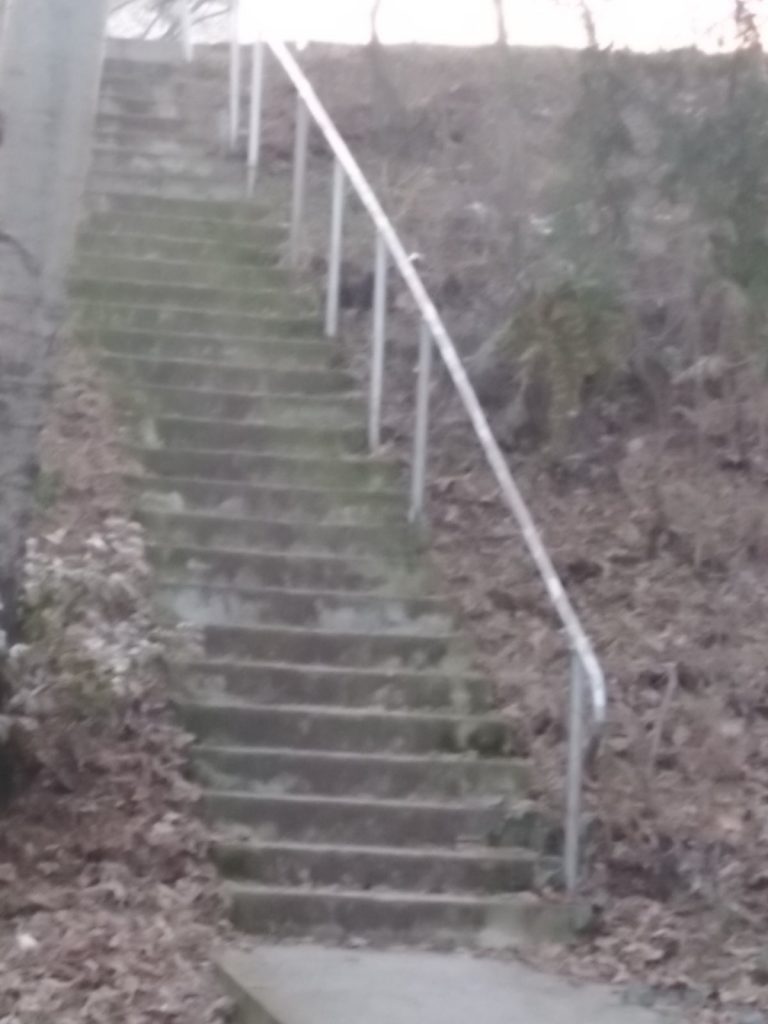
Public transport is another obstacle – how do the handicapped people get down the stairs in subways or the tube? How can they get on and off buses? Why must these simple tasks of using public services be so hard for them?
Thankfully, many buses are now equipped with ramps to get onto, as well as having an automated platform that lowers to the level of the ground to allow easier access. Also, many trains and buses now have spaces reserved for disabled passengers – a space for wheelchairs, for example. Some train stations have elevators, and some subways and passages also have the due lifts. However, there are still stations that lack an accessible entrance/exit.
Businesses and shopping centres, workplaces and healthcare institutions should consider providing easy navigation for the disabled.
Elevators should be equipped with braille for the blind (or partially sighted), while ramps should be equipped with railings for support…
While parking spaces are something that has been a widespread issue lately, it has been addressed to some degree. Many supermarkets, retailers, business zones and public car parks have already allocated spaces for the disabled, but you must have a valid Blue Badge to be able to use them. These parking spaces are normally closer to the entrance of any premises and often larger than normal spaces, simply to allow some extra room for wheelchairs and other walking aids, as well as to get in and out of the vehicle.
For the deaf or visually impaired, another barrier faced daily is the task of crossing the road. The UK’s traffic light system, for example, is designed to help all citizens, including those with a disability, to cross safely.
Our own local traffic lights are fitted with both a sound signal and light signals. Protruding ground markings indicate where the pavement ends. This serves as a signal for the visually impaired, while braille (if available) is easily spotted on the pedestrian lights’ button. For the visually impaired, a sound indicates when it is safe to cross, while for deaf citizens, the light will turn green or flash green. However, there are not many passages for wheelchairs or prams. Neither are there any aids for handicapped people who use crutches.
What can we do about the problem?
Clearly, there’s still a long way to go if we are to build a safe environment that can fully accommodate the disabled members of society. With the Earth’s ageing population, it is likely that we will need to rely on such adaptions of the public areas in the future. New buildings should have ramps for easy access. Constructions should be with multiple floors and elevators that have braille on the buttons. Public toilets should be easily accessible too, while buses should continue to make improvements for the handicapped.
PUBLIC SPACES THAT LACK ACCESSIBILITY
Public facilities
Buildings or spaces generally used by the public, such as restaurants, retail stores, hotels, conference centres, medical and other offices, theatres, sports stadiums, educational facilities, historic sites, other tourist attractions, etc., definitely need improvement. Access there includes not only easy entrance into the building, but also into all specific rooms or halls where events take place or where the visitors need to go in order to do business or receive services.
Federal, state, and local government facilities
Although federal facilities fall under a different law, all such must be accessible by disabled people who take part in governmental affairs. They should enjoy fully their civic life.
Outdoor spaces, such as public parks, monuments, squares, gardens, etc. – it may seem that these would always be accessible, but they often turn out a ‘taboo’ for the disabled. Parks may have stairs or other obstacles, or be set above the sidewalk level. Other areas might have steps or a staircase. High-traffic streets could also surround them (difficult to cross even by people without disabilities). Paths and sidewalks might be too narrow to allow easy wheelchair passage. Badly maintained or poorly constructed pavements (or gravel paths) may cause difficulties for anyone who is unsteady on their feet or lacks proper sight.
With the necessary renovation, all outdoor spaces could become great areas for interaction.
Public ways
Paths, streets, sidewalks or pedestrian passages are all public ways. Their accessibility may involve curb cuts or ramps, traffic signals that can be both heard and seen, numerous crosswalks, signs, etc.
Public transport
As normal citizens, people with disabilities are entitled to access to public transport. This access is secured mostly by special steps (lifts) at the doors of buses and trams. In general, subways, trains and planes, at least for most U.S. facilities, are entered on the ground level, and elevators or ramps are available to take people to platforms and gates. However, it is hardly the case with local public areas (Burgas, Bulgaria.)
Physical access, according to the ADA, encompasses a large number of very specific design features. The width of hallways (to the inch or centimetre), the size of elevators (and the positioning of elevator buttons), the height of drinking fountains, the size and position of grab bars in restrooms, the shape of door handles, the width and number of handicapped parking spaces, the slope of wheelchairs, etc.
How does Bulgaria deal with the problem?
Thirty years ago, the global political leaders made a historic commitment to children around the world by adopting the UN Convention on the Rights of the Child. The Convention on the Rights of Persons with Disabilities (approved by the UN General Assembly in December 2006) further reinforces the rights of children with disabilities and introduces new obligations on the states to remove the barriers that limit their participation in all relevant domains of life.
Bulgaria has ratified both conventions. Over the last decade, the country has taken important steps for the inclusion of children, adolescents and young people with disabilities. However, despite the efforts on a national level, children with disabilities remain one of the most excluded (or even segregated) and invisible groups in society.
Why the issue is still challenging in Bulgaria and what needs to change?
The medical approach
Medical or charity approaches to disabilities are still prevailing in policies and practices, as well as in the general understanding of this problem. Thus, efforts are focused on addressing the individual conditions and not on removing the institutional, social, attitudinal and physical barriers that limit the social participation of people with specific needs.
Early identification and early support for development of children with disabilities
Early detection and early childhood intervention services that support caregivers to provide nurturing care to children with disabilities and developmental difficulties during the first 3 years of life are not sufficiently developed. This limits the opportunities for growth and improvement.
Support to caregivers of children with disabilities and developmental difficulties
Support to caregivers of children with disabilities and developmental difficulties, including counselling and mental health support, parenting support groups, support for building caregivers’ skills to provide adequate care, reliable information on care and available support, respite care services, etc. are not developed.
Insufficient support to kindergartens and schools to be more inclusive
There is a need to invest more in teacher professional development by building their competencies to respect diversity and support the learning. The environments in education systems should encourage teachers to co-operate among themselves as well as with other professionals and in the community to build individualized support to all children with disabilities.
Assistive technologies and learning materials
Assistive technologies, particularly alternative communication and augmentation technologies (including low cost) are not well known and used by practitioners to facilitate participation and learning of children with disabilities. Many children with disabilities lack appropriate support and adaptation, or access to learning materials so that they can actively participate in classrooms.
Inaccessible physical infrastructure
Most of the buildings, streets, public transport vehicle, schools, sport facilities, cultural halls, service centres, playgrounds, etc. are not accessible and adapted for children with disabilities.
Stigma and discrimination
Stigma and discrimination on the part of families, professionals, peers, employers and the public continue to undermine the rights of children with disabilities. They lead to segregation – in the school and the community, affect children’s self-esteem and limit chances for employment and meaningful participation in all domains of life.
The major problem in Burgas, Bulgaria is that there are not enough places that have special platforms or assigned places for disabled people. There has been an improvement, though. Two or three schools have incorporated elevators in their buildings.
Summary
Ensuring accessibility for people with disabilities means more than building ramps and accessible restrooms. It calls for a change in basic attitudes, a change that has been at least partially accomplished in the United States and many other countries, but which hasn’t even started in some others. That attitude change won’t have been accomplished until a great majority of people around the world understand that individuals with special needs are not defined by their disabilities.
To achieve that end, we have to demand enforcement of laws and regulations that protect those individuals’ rights, work for policy change and the passage of laws and regulations in places where they don’t exist, collaborate with those who design, build, and fund projects where accessibility can be built in, enlist the media to influence public opinion, and keep at it as long as necessary.
Only when people with disabilities can live their lives free of unjust barriers will the work be done!